
Use Shared Cupboard Labels Only Where They Clarify the Contents
Labels can clarify a shared cupboard when they answer a real question about where something belongs. They are less useful when every visible object acquires a tag that nobody
Shopping disclosure: retailer links in this story are ordinary links; we currently earn no commissions. If we add affiliate links in future, they will be identified. Our full disclosure.

Labels can clarify a shared cupboard when they answer a real question about where something belongs. They are less useful when every visible object acquires a tag that nobody consults. Begin with the items household members repeatedly struggle to find or return, then decide whether a label is actually the simplest response.
Ask what is confusing
Observe the cupboard's ordinary use and discuss the specific uncertainty. Perhaps two shelves hold similar containers, or a shared item is often returned to a different place. Name that issue before choosing wording. A label should help someone take the next ordinary action without needing a separate explanation.
The food container and lid guide offers a related example of keeping relationships understandable. A cupboard label will not solve a container system whose matching pieces have not been identified, so address the actual objects before adding written instructions around them.
Keep the words familiar
Choose language the people using the cupboard understand. A plain description of the contents can be more useful than an organising term borrowed from a photograph. Consider readability and the users' preferences rather than making every label match a decorative style at the expense of clarity.
Avoid displaying unnecessary personal information, particularly in a cupboard used by visitors or a wider group. Keep any sensitive requirements or records in an appropriate place. A shared label does not need to explain why a particular household member owns an item or uses a certain product.
Check the surface and the product
Follow the label maker's application and removal information and the cupboard's care requirements. Do not assume adhesive is harmless to every finish. Obtain permission before applying labels to rented or shared fixtures, and choose another appropriate method if the proposed attachment is uncertain.
Preserve original product labels and essential instructions on stored items. A household category label should not cover ingredient, use or care information. The ready dishes guide helps keep the object's actual readiness central rather than confusing a neatly labelled location with a completed care routine.
Test the label through a return
Ask whether another user can put the relevant item away confidently. If not, revise the wording or placement, or reconsider the cupboard arrangement itself. A label cannot make an unsuitable shelf accessible or create room for an object that does not fit.
Review the labels when contents change. Remove or update obsolete information using the relevant product guidance so that the cupboard does not keep giving instructions for an old arrangement. Keep only the labels that still answer a useful question. The result should be a cupboard that is easier to share, with fewer guesses about the contents and a straightforward return place for the things actually used.
A little more to adore

Give Bedside Glasses a Suitable Case and a Clear Place
Give bedside glasses an appropriate case, specific care, stable clear placement, comfortable access, separate belongings, and a complete morning handover.
Read the story →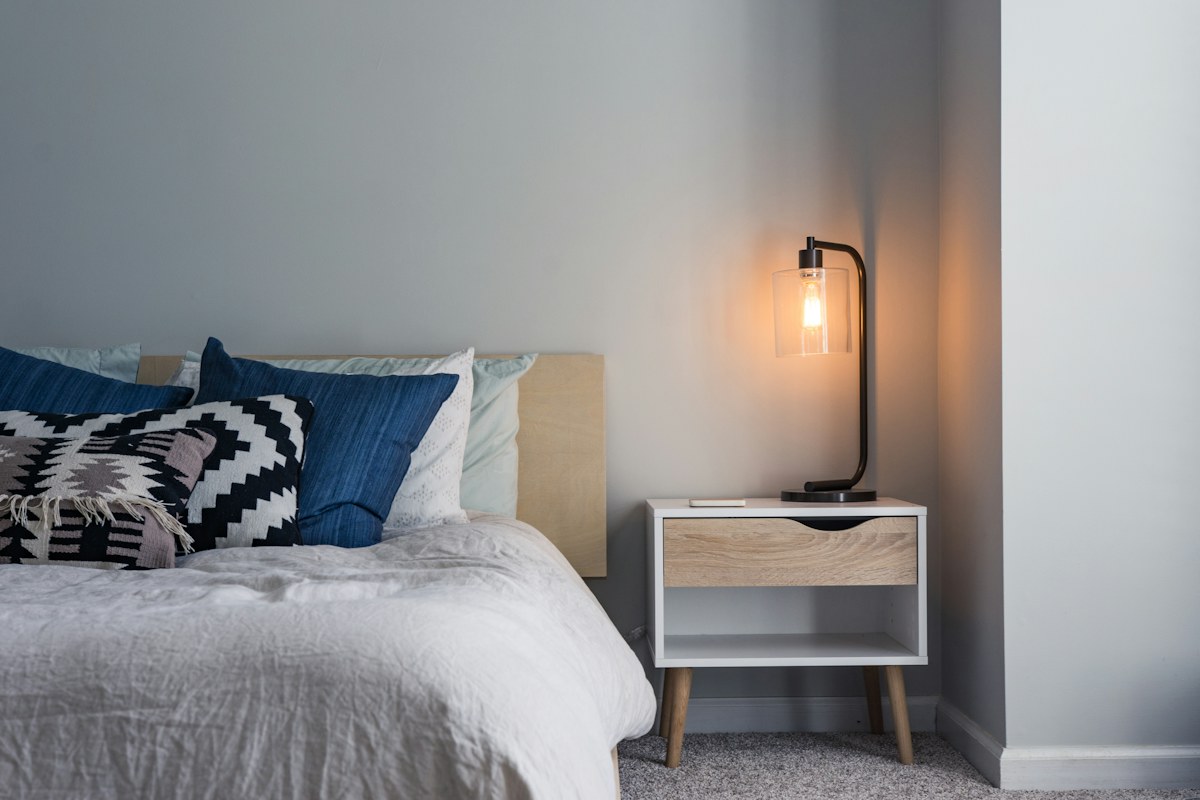
Choose a Bedside Lamp Through Switch Reach
A bedside lamp is easier to choose when its switch can be reached through the way the bed is actually used. A photograph of a lamp on a table says little about that ordinary m
Read the story →