
Check a Plant’s Space Through the Curtain’s Actual Movement
Check a plant’s room position alongside the curtain’s actual movement, following relevant care and product information rather than forcing either arrangement.
Shopping disclosure: retailer links in this story are ordinary links; we currently earn no commissions. If we add affiliate links in future, they will be identified. Our full disclosure.

A plant and a curtain can each look well placed while competing during the room's ordinary routine. Opening the fabric may brush the container, and reaching a control may require moving the plant first. Check that movement before treating the window arrangement as finished, keeping the plant's actual care needs and the curtain's intended operation in view.
Begin with the plant's appropriate position
Use suitable plant-care guidance for the actual plant rather than moving it solely to create a decorative composition. Its requirements are a separate question from the room photograph. Keep an important uncertainty about light, conditions or care with an appropriate dependable source.
Identify the actual container and the surface it occupies. Follow the product and furniture information for that arrangement. A decorative outer shape should not be treated as proof that any nearby shelf or sill is a suitable place for the complete object.
Operate the curtain as intended
Use the real controls and normal range of movement according to the fitting's instructions. Do not pull the curtain around an obstacle or force an unfamiliar mechanism. If you cannot establish the intended operation, ask an appropriate source before making the plant arrangement depend on a guess.
The curtain operation guide addresses that basic task. A plant display should not silently change the curtain's use into a daily workaround that nobody explicitly chose.
Observe the complete movement
Look at what happens while opening and closing, not only the final positions. A clear-looking gap at either end may conceal contact during the movement. Keep the trial appropriate and stop if the setup creates a difficulty rather than repeatedly testing an unstable arrangement.
Notice the space needed to reach the control comfortably. Do not assume someone else in the household can make the same awkward reach you have adopted. An ordinary shared room should remain understandable and usable for its actual users.
Compare a suitable alternative
Consider another appropriate plant position, container arrangement or permitted curtain setup through the relevant guidance. Change one element at a time so you can tell what solves the actual conflict. Do not move the problem to another unsuitable surface simply to clear the window photograph.
The occupied room mirror guide offers a related way to think about the space. Decorative decisions become more useful when checked through the people, views and movements that occur in the room every day.
Include care and seasonal changes
Keep access for the plant's proper care and the curtain's own maintenance. A display that works only until one object needs attention may require another arrangement. Use actual guidance when conditions change instead of assuming the most photogenic position remains suitable throughout the year.
Tell other household members about a revised setup when it affects ordinary operation. The successful relationship lets the plant occupy an appropriate place and the curtain move as intended, allowing both to be enjoyed without turning a simple daily action into a repeated negotiation between decorative objects.
A little more to adore

Give Bedside Glasses a Suitable Case and a Clear Place
Give bedside glasses an appropriate case, specific care, stable clear placement, comfortable access, separate belongings, and a complete morning handover.
Read the story →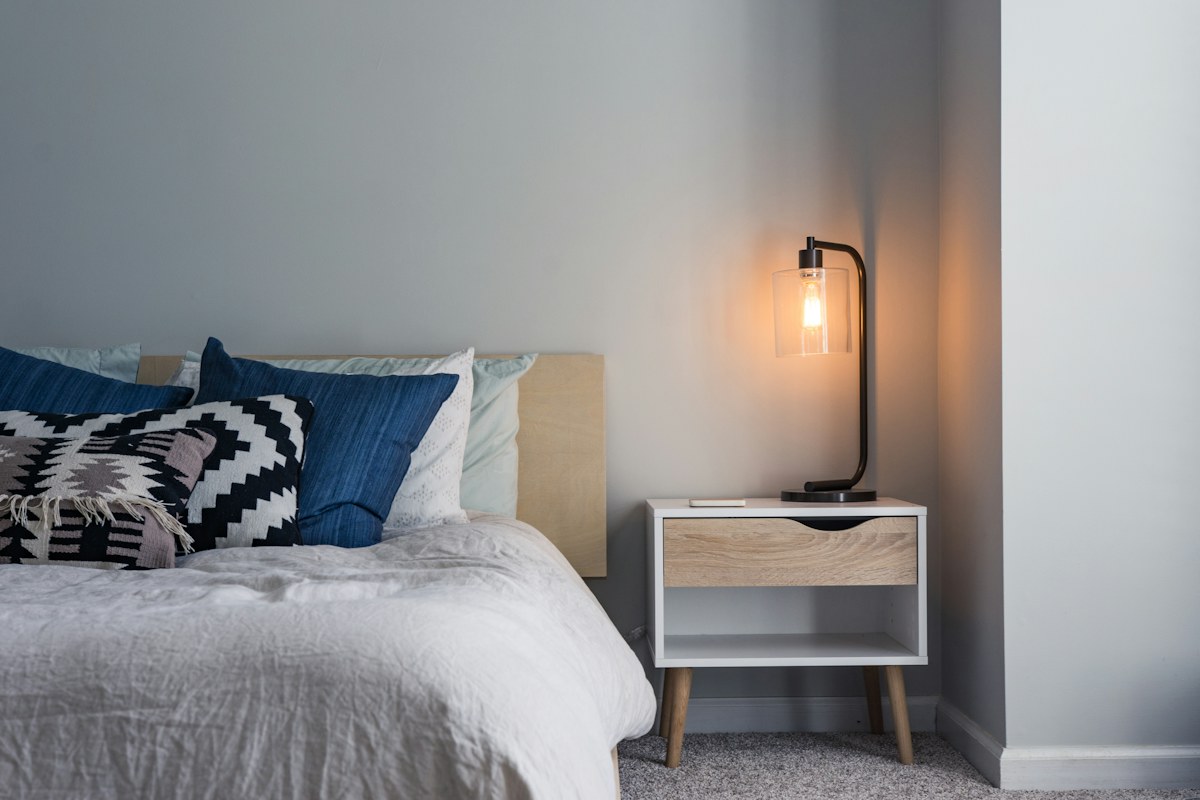
Choose a Bedside Lamp Through Switch Reach
A bedside lamp is easier to choose when its switch can be reached through the way the bed is actually used. A photograph of a lamp on a table says little about that ordinary m
Read the story →