
Choose a Laundry Basket Through the Complete Handling Route
Choose a laundry basket through collection, comfortable carrying, complete route dimensions, suitable care, manageable loads, and a recognizable final ready return.
Shopping disclosure: retailer links in this story are ordinary links; we currently earn no commissions. If we add affiliate links in future, they will be identified. Our full disclosure.
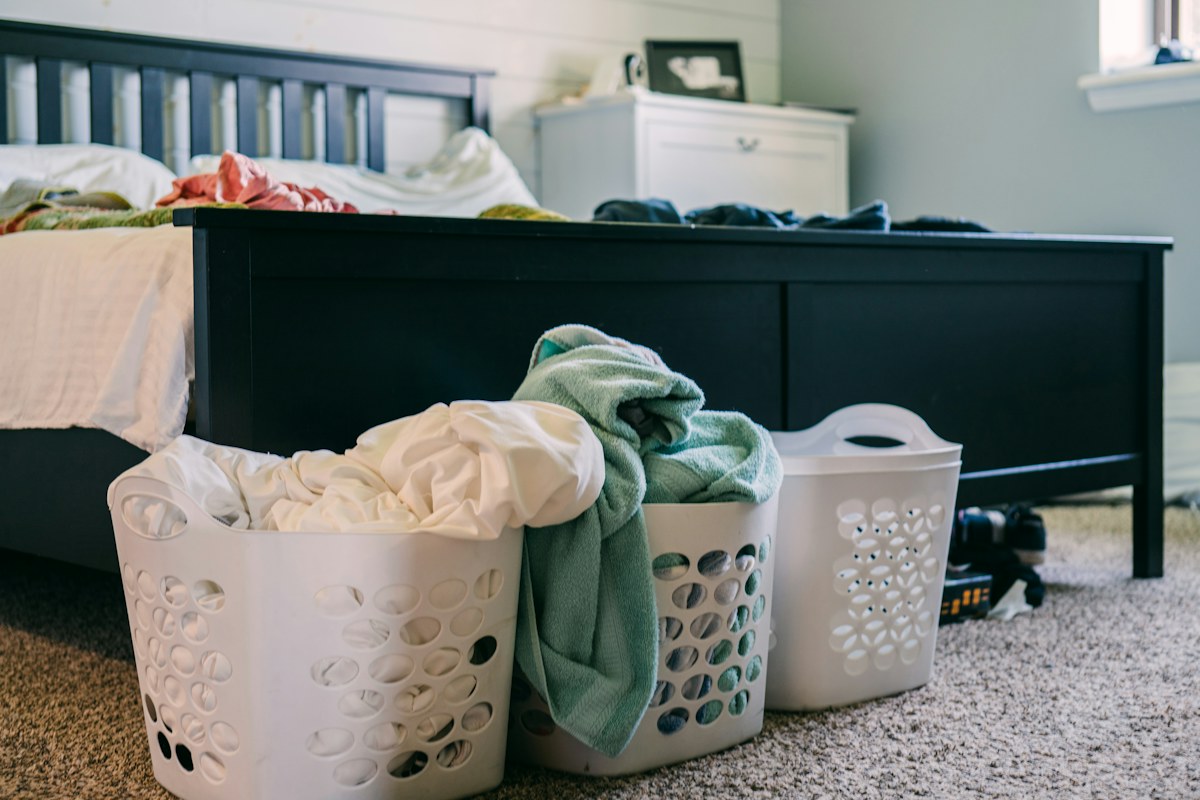
A laundry basket has a route through the home. It may begin beside a wardrobe, pass through a doorway, sit near washing equipment, and return after clothing is put away. Choose through that complete journey rather than the shape of an empty basket in a tidy room photograph.
Trace the actual stages
Name where the basket will collect items and where each later stage happens. Consider whether you need separate suitable equipment for used clothing and clean items. Do not assume one decorative basket can perform every role without appropriate care between them.
Measure the usable spaces, including door openings, cupboard fronts, and equipment access. Include the basket’s complete exterior and handles. A container that fits a floor corner may still block a door or be awkward to lift from that position once occupied. Keep household access and the product’s intended use in the decision.
Check comfortable handling
Read the maker’s carrying and care guidance. Consider a realistic load you can comfortably manage rather than filling the basket to its visual limit. Notice the handles, the way the basket sits against your body, and the visibility of the route when it is carried.
Try appropriate permitted handling before purchase where possible. Avoid improvised overload or stair tests. If the journey is awkward, change the arrangement or use manageable stages instead of assuming that a larger basket will make the work easier. Capacity and comfortable movement are different questions.
Include the care space
Check how the basket itself can be maintained. A textile liner, rigid base, or woven surface may have specific instructions. Think about where any permitted cleaning and drying will be completed, and how the basket returns to service afterward.
The Sunday home reset can help make one part of the laundry routine finite. Separate ready equipment from items awaiting care, and finish returning clean clothing before using the same basket as an indefinite holding area. A good basket cannot decide which stage an unfinished load has reached.
Choose the final return
After clothing is put away, where does the empty ready basket belong? Check that this position remains usable when nearby drawers are open or the room is occupied. A basket that looks attractive beside a chair may become an obstacle during ordinary movement.
The shoe-shelf ready-pairs guide offers another way to think about a recognizable ready state. Keep the routine understandable to the people using it. If a lid, liner, or separate compartment adds a task, decide whether that task helps the actual household rather than merely improving the appearance of storage.
Should I choose a bigger basket to do fewer trips? Not automatically. Choose through safe comfortable handling, product guidance, the real route, and manageable work stages. A smaller suitable load can be more practical when the larger alternative is awkward to carry or leaves clean clothing waiting indefinitely.
A little more to adore

Give Bedside Glasses a Suitable Case and a Clear Place
Give bedside glasses an appropriate case, specific care, stable clear placement, comfortable access, separate belongings, and a complete morning handover.
Read the story →
Close the Desk Notebook with a Clear Next Step
Close a desk notebook with appropriate privacy, one precise next step, a suitable page marker, clear loose-paper routes, safe tool storage, and an easy restart.
Read the story →