
Test a Trouser Pocket with the Phone You Actually Carry
Test a trouser pocket with the actual phone and case, assessing depth, access, seated comfort, garment shape, appropriate contents, and secure carrying needs.
Shopping disclosure: retailer links in this story are ordinary links; we currently earn no commissions. If we add affiliate links in future, they will be identified. Our full disclosure.
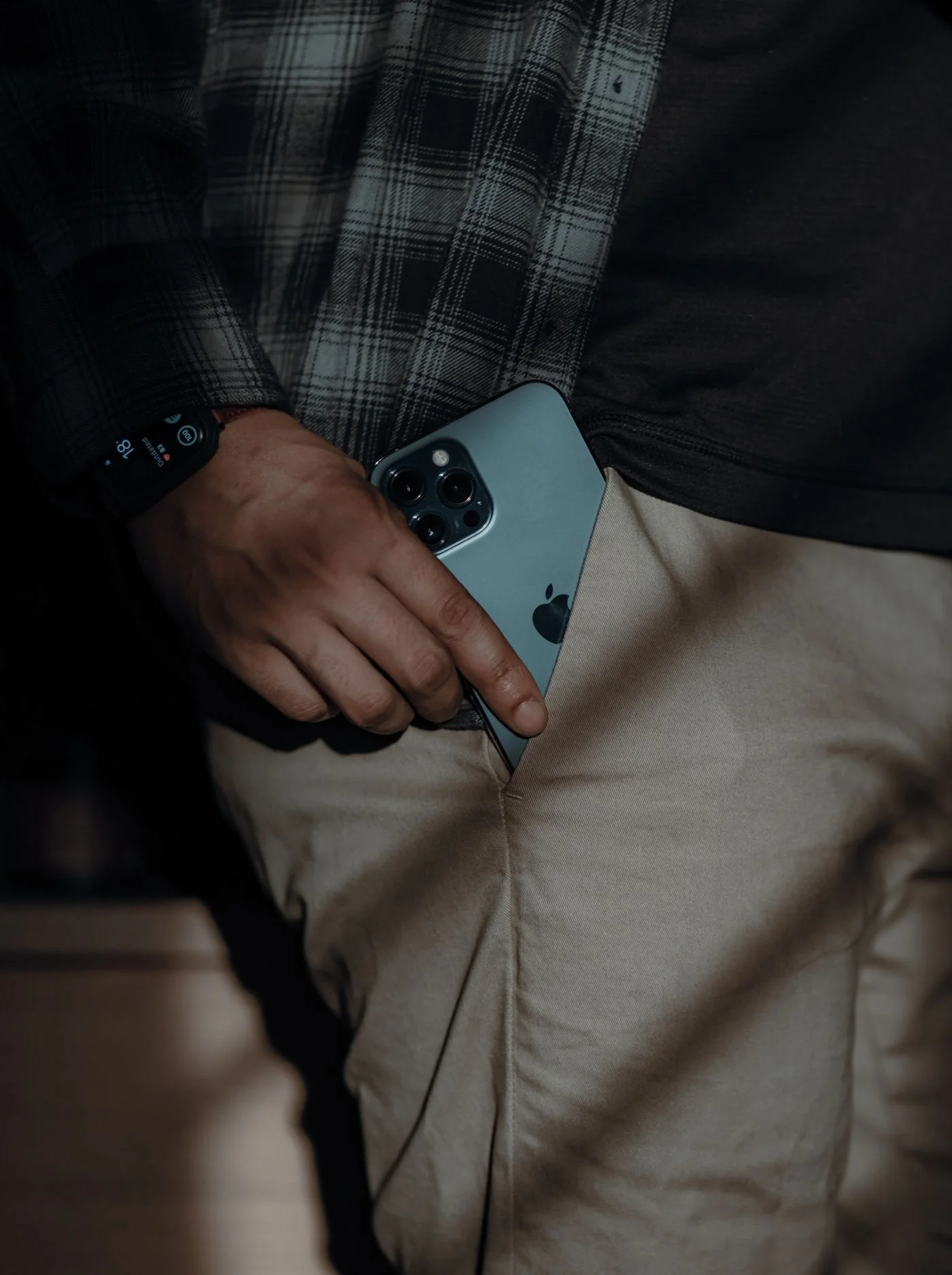
A trouser pocket can look generous while failing to hold your actual phone comfortably. Before choosing trousers for everyday wear, test the pocket with the device and case you use. The useful assessment includes sitting, movement, garment shape, and an appropriate secure carrying plan, rather than whether the phone briefly fits inside.
Start with the actual device
Use the complete phone with its normal case or other necessary attached component. Check the garment's intended use and pocket construction. A decorative or shallow opening may not be designed to hold a device at all.
Respect the seller's fitting and return conditions if trying new trousers. Avoid damaging the garment or using a trial as a guarantee of security. A pocket assessment cannot establish that valuables will remain safe in every setting.
Check depth and access
Place the phone appropriately in the intended pocket and assess how much remains exposed. Retrieve it without pulling harshly on the opening. A pocket that stretches awkwardly may change the fit even when the device stays in place.
Look at the seam and fabric around the load. Heavy contents can alter the way trousers hang. A pair can still suit your wardrobe when the phone belongs in an appropriate bag instead; the pocket need not perform every possible task.
Try the seated position
Sit in an ordinary chair and stand again. Notice pressure at the hip or thigh and any interference with the waistband. Do not assume that walking comfort settles what happens during a long seated meal or commute.
Move normally in a clear suitable space. If the device shifts or feels uncomfortable, stop the test and choose another carrying arrangement. Avoid bending or twisting merely to prove the pocket can cope.
Consider the rest of the contents
Keep keys, coins, and other objects from creating an unsuitable mixed load. Follow appropriate device-care guidance and choose secure storage for important belongings. A pocket should not become the whole day bag simply because it has available space.
Assess right and left sides separately where the construction differs. A back pocket can have another function and comfort profile from a front pocket. Use the actual arrangement rather than a general assumption about trouser styles.
Make the wardrobe decision clear
Decide whether pocket performance is essential for your routine or a preference you can meet elsewhere. Compare fit, fabric, care, and current seller terms alongside it. A useful purchase meets the important requirements without expecting one feature to compensate for poor overall fit.
Does a deep pocket guarantee security? Use an appropriate secure carrying plan. Should I size up for the phone? Assess the whole garment first. Can a good trouser have unsuitable pockets? It may work with a different carrying arrangement.
Our straight-jeans guide considers overall fit. The tote-bag guide offers another place for the everyday load.
A little more to adore

How to Choose a Cotton Tee You Will Actually Repeat
How to Choose a Cotton Tee You Will Actually Repeat. Practical fit checks, outfit decisions and buying advice for everyday life.
Read the story →
An Everyday Cardigan That Works With Your Existing Tops
An Everyday Cardigan That Works With Your Existing Tops. Practical fit checks, outfit decisions and buying advice for everyday life.
Read the story →