
Make Room for Mug Handles in a Small Cupboard
Make room for mug handles by reviewing current drinkware, complete dimensions, suitable shelf support, comfortable retrieval, appropriate care, and real purchase gaps.
Shopping disclosure: retailer links in this story are ordinary links; we currently earn no commissions. If we add affiliate links in future, they will be identified. Our full disclosure.
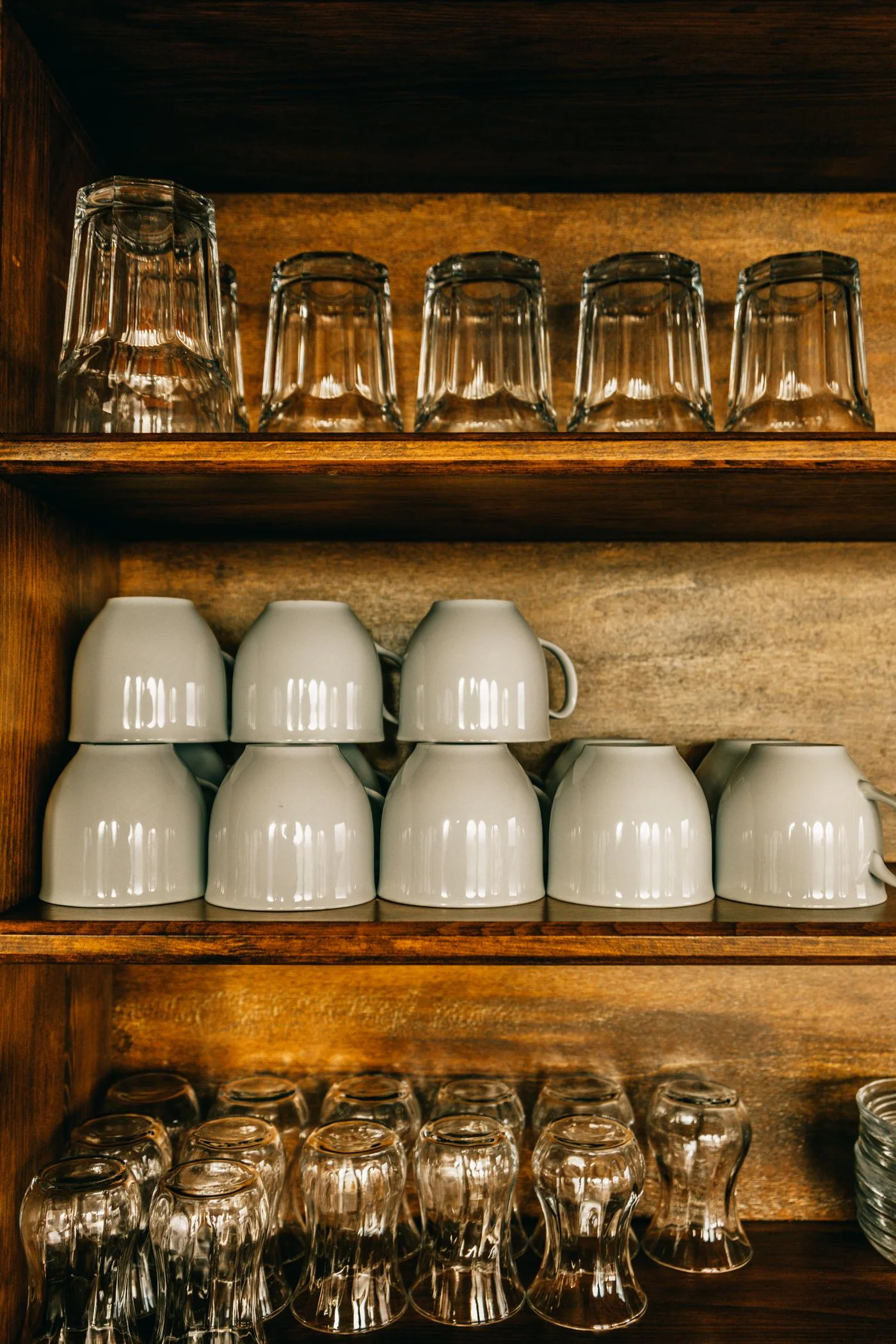
A cupboard can have enough shelf area for mugs while leaving their handles awkwardly tangled. Review the actual shapes and the way you retrieve a cup before buying more storage. The useful arrangement makes familiar drinkware easy to use, with appropriate support and care, rather than maximizing the number of objects in the photograph.
Choose the mugs you actually use
Separate the current everyday selection from occasional or decorative pieces. Check condition and intended use, including any material or temperature limits. A damaged or unsuitable vessel should not remain in the ready group simply because its pattern is a favorite.
Ask other household members about their preferences before changing the shared shelf. Handle shape and weight can matter as much as capacity. Keep wanted practical choices accessible even when they do not match one another.
Measure the complete shape
Compare the usable shelf dimensions with each mug including its handle. Look at the cupboard opening and any hinge that reduces access. A row of round bodies can fit neatly while the handles prevent comfortable retrieval.
Follow the furniture's load and installation guidance. Do not add hanging hooks or a shelf riser without confirming suitability for the actual structure and intended contents. An accessory is useful only when it provides an appropriate stable arrangement.
Try the hand movement
Place mugs on a suitable stable shelf with space to reach the intended grip. Test removing one without knocking another. If the arrangement works only by lifting several pieces first, reduce the accessible group or change their positions.
Avoid stacking unless the specific vessels are intended and suitable for that use. Similar-looking shapes may not sit securely together. A lower capacity can be worthwhile when it keeps drinkware usable and easier to inspect.
Keep the care route complete
Return mugs appropriately clean and dry according to their instructions. Give lids, infusers, or other components their own relevant attention. A cup with extra parts needs a clear way to remain a complete usable set.
Check the surrounding shelf during ordinary cleaning and follow material-specific care. Do not hide moisture or damage beneath a liner chosen only for appearance. The cupboard should support suitable storage conditions for the contents.
Buy only for a clear gap
If another mug is wanted, identify its role, dimensions, handle needs, and care requirements. Compare those with the existing selection before purchasing a matching set. A replacement for one uncomfortable cup need not bring five more into the cupboard.
Should every mug match? Personal useful choices can coexist. Can all mugs be stacked? Check actual suitability. Will a riser always help? Assess stability, clearance, load, and retrieval.
Our relaxed-table guide considers drinkware in use. The Sunday-home reset gives the cupboard a modest review point.
A little more to adore

Give Bedside Glasses a Suitable Case and a Clear Place
Give bedside glasses an appropriate case, specific care, stable clear placement, comfortable access, separate belongings, and a complete morning handover.
Read the story →
Close the Desk Notebook with a Clear Next Step
Close a desk notebook with appropriate privacy, one precise next step, a suitable page marker, clear loose-paper routes, safe tool storage, and an easy restart.
Read the story →